Digital Marketing Trends in 2026 Shaping Online Business Growth
Digital marketing continues to evolve rapidly as technology, consumer behavior, and data-driven strategies transform how businesses connect with their audiences. In 2026, digital marketing is no longer limited to basic social media promotions or search engine optimization. Instead, it has become a complex ecosystem powered by artificial intelligence, advanced analytics, immersive experiences, and personalized communication.
Businesses that want to remain competitive must adapt to emerging trends and understand how digital technologies influence customer engagement. From AI-powered personalization to privacy-focused marketing strategies, the digital landscape is shifting toward smarter and more ethical marketing practices. Understanding these trends allows companies to create more meaningful customer relationships and drive sustainable business growth.
The following sections explore some of the most influential digital marketing trends shaping online business growth in 2026.
Table of Contents
ToggleArtificial Intelligence and Automation in Marketing
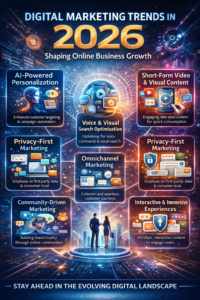
Artificial intelligence has become one of the most transformative forces in digital marketing. In 2026, AI tools are no longer used only for basic automation but for managing entire marketing campaigns with minimal human intervention. These systems analyze large volumes of customer data to predict consumer behavior and optimize marketing strategies in real time.
AI-driven platforms can automatically adjust advertising budgets, test different marketing messages, and identify the most effective audience segments. This allows businesses to deliver highly relevant marketing content while improving efficiency and reducing manual effort. As AI technologies continue to advance, marketers can focus more on creativity and strategy while automation handles complex analytical tasks.
Hyper-Personalization and Data-Driven Customer Experiences
Personalization has become a key expectation for modern consumers. In 2026, businesses are using advanced data analytics and AI to deliver highly personalized experiences across websites, email campaigns, and social media platforms. Instead of generic marketing messages, companies now tailor content based on user behavior, preferences, and previous interactions.
This approach helps businesses build stronger relationships with their customers by providing relevant recommendations and targeted offers. Personalized marketing has been shown to significantly increase engagement and conversion rates because customers are more likely to respond to content that matches their interests. As data analytics continues to evolve, hyper-personalization will remain a central strategy for improving customer satisfaction and loyalty.
Short-Form Video and Visual Content Dominance
Video content has become one of the most powerful forms of digital communication. In 2026, short-form videos continue to dominate online platforms as consumers increasingly prefer quick, engaging, and visually appealing content. Social media platforms encourage brands to share concise storytelling through videos that capture attention within seconds.
Short videos help businesses demonstrate products, share brand stories, and engage audiences more effectively than traditional text-based content. This format also encourages higher interaction rates through comments, shares, and likes. As mobile usage continues to grow, visual content will remain a crucial component of successful digital marketing strategies.
Voice Search and Visual Search Optimization
Search behavior is changing as more consumers use voice assistants and visual search tools to find information online. Instead of typing traditional search queries, users now rely on voice commands or images to discover products and services. This shift requires businesses to optimize their digital content for conversational keywords and descriptive metadata.
Voice search queries are often longer and more natural than traditional typed searches, which means marketers must adjust their SEO strategies accordingly. Visual search also allows users to upload images to identify products or explore similar items. Businesses that optimize their content for voice and visual search can improve their online visibility and reach new audiences more effectively.
Privacy-First Marketing and First-Party Data
Consumer awareness about data privacy has increased significantly in recent years. As a result, governments and technology companies are introducing stricter regulations to protect personal information. In response, digital marketing strategies in 2026 are shifting toward privacy-first approaches that prioritize transparency and ethical data usage.
Instead of relying on third-party cookies, businesses are focusing on collecting first-party data directly from their customers. This information may include website interactions, email subscriptions, surveys, and customer feedback. By using consent-based data collection methods, companies can still personalize marketing experiences while building trust with their audiences.
Interactive and Immersive Digital Experiences
Modern consumers expect more than static advertisements or simple promotional messages. In 2026, digital marketing increasingly incorporates interactive and immersive experiences that allow customers to actively engage with brands. Technologies such as augmented reality, virtual reality, and interactive content are transforming how businesses showcase their products.
For example, augmented reality allows customers to virtually try products before making a purchase, while interactive quizzes and assessments encourage deeper engagement with brand content. These immersive experiences not only capture attention but also create memorable brand interactions. As digital technology becomes more advanced, immersive marketing will play an increasingly important role in attracting and retaining customers.
Omnichannel Marketing and Seamless Customer Journeys
Customers today interact with brands across multiple platforms, including websites, social media, mobile applications, and messaging services. In 2026, successful digital marketing strategies focus on creating a seamless experience across all these channels. This approach, known as omnichannel marketing, ensures that customers receive consistent messaging regardless of where they engage with a brand.
By integrating data from different platforms, businesses can better understand customer behavior and deliver coordinated marketing campaigns. For example, a user who views a product on a website may later receive personalized recommendations through email or social media advertising. This connected approach improves customer experience and increases the likelihood of conversion.
The Role of Community-Driven Marketing
Another emerging trend in digital marketing is the growing importance of online communities. Consumers increasingly value authentic connections with brands and other users rather than traditional advertising messages. Businesses are therefore investing in community-driven marketing strategies that encourage discussions, user participation, and shared experiences.
Online communities on social platforms, forums, and messaging groups allow brands to interact directly with their audiences. These communities foster trust, loyalty, and long-term customer relationships. When customers feel involved in a brand’s community, they are more likely to become advocates who recommend products to others.
Conclusion
Digital marketing in 2026 is shaped by rapid technological innovation and evolving consumer expectations. Artificial intelligence, personalized experiences, immersive content, and privacy-focused strategies are transforming how businesses communicate with their audiences. Companies that embrace these trends can create more engaging marketing campaigns and build stronger relationships with their customers.
At the same time, the success of digital marketing depends on maintaining a balance between technology and human creativity. While advanced tools help automate processes and analyze data, effective storytelling and authentic brand communication remain essential. Businesses that combine innovative technology with meaningful customer engagement will be better positioned to achieve sustainable growth in the digital marketplace.
As digital platforms continue to evolve, marketers must remain adaptable and open to new strategies. By understanding and implementing the latest digital marketing trends, businesses can strengthen their online presence, attract new customers, and drive long-term success in an increasingly competitive digital world.