Which AI Platforms Can You Use Today? A Practical Guide to OpenAI, Anthropic, Google, and More
Artificial intelligence is no longer limited to simple chatbots. Today, AI platforms can help people write content, analyze information, generate code, create images, understand documents, conduct research, and automate everyday workflows.
The challenge is that there are now many AI platforms to choose from. OpenAI, Anthropic, Google, and other AI companies offer platforms with different capabilities and use cases.
So, which AI platform should you use?
The answer depends less on the name of the platform and more on what you actually want to accomplish.
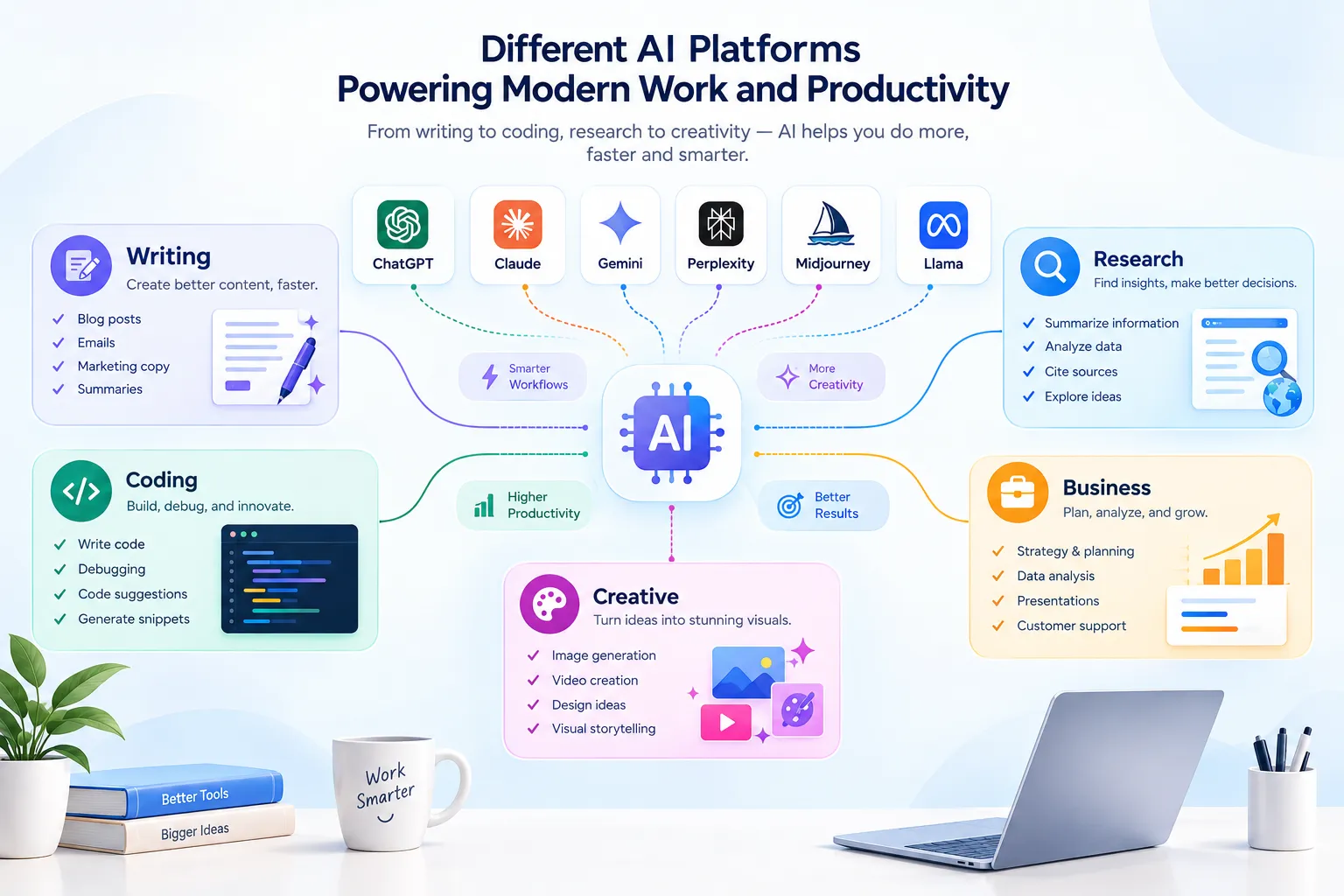
AI Platforms Are Changing the Way We Work
AI platforms are becoming an important part of modern digital workflows. They can support everything from content creation and research to coding, customer support, marketing, and business automation.
An AI platform provides access to artificial intelligence capabilities that can help users complete specific tasks or manage different workflows.
For example, a writing platform can help create and improve content, while a coding platform can assist developers with programming tasks. Other platforms can help businesses analyze information, automate repetitive processes, generate visuals, or improve productivity.
This is why there are now thousands of AI platforms and tools available for different needs.
OpenAI: A Broad Range of AI Platforms
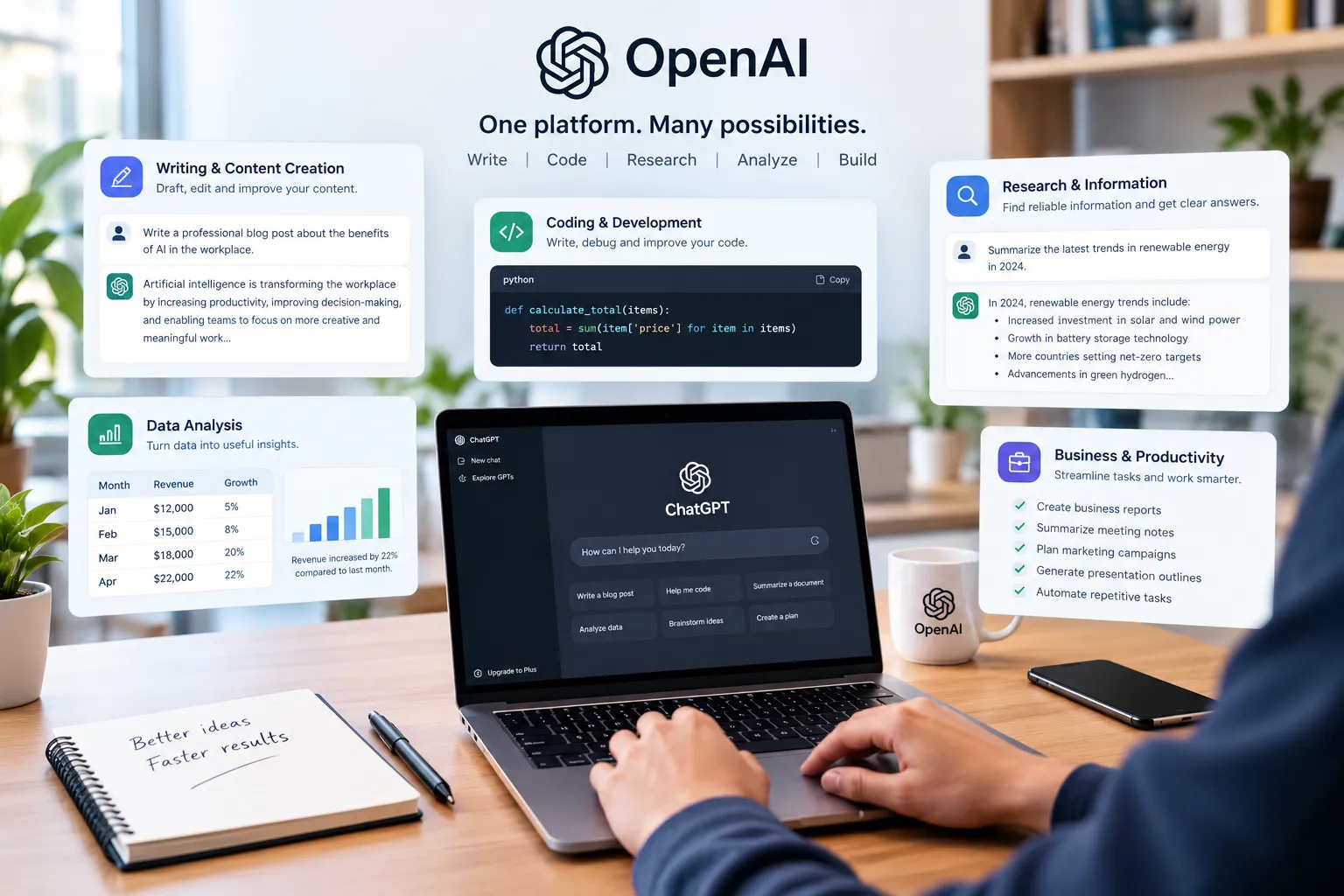
OpenAI has become one of the most recognized names in generative AI. Its products and technology are used across conversational AI, writing, coding, research, analysis, and application development.
Depending on the product and use case, OpenAI platforms can support tasks such as:
- Content creation and editing
- Question answering and research
- Coding and debugging
- Summarization
- Brainstorming
- Data and information analysis
- AI-powered application development
For businesses, these capabilities can be useful for reducing repetitive work and building AI-assisted workflows.
Anthropic: An AI Platform for Detailed Work
Anthropic is another important name in the AI industry, with its Claude family of products.
Claude is commonly used for tasks that require detailed understanding of text, documents, instructions, and complex information.
Typical use cases include:
- Reviewing long documents
- Summarizing reports
- Improving written content
- Research assistance
- Coding support
- Business communication
- Organizing large amounts of information
For professionals who regularly work with lengthy documents or detailed written material, an AI platform with strong context handling can be particularly useful.
The important point is not simply that one platform is better than another. Different AI platforms can be useful for different workflows and requirements.
Google Gemini: AI Across Different Types of Tasks
Google is another major company in the AI space through its Gemini products.
Gemini can support a range of tasks involving text, coding, reasoning, research, and other forms of information.
Its connection with Google’s wider technology ecosystem also makes it relevant for users who already rely heavily on Google products.
Common applications include:
- Research and information analysis
- Writing and editing
- Coding assistance
- Brainstorming
- Summarization
- Working with different types of content
As AI becomes more integrated into everyday software, the ability to work across different types of information is becoming increasingly important.
Beyond the Big Three: Exploring More AI Platforms
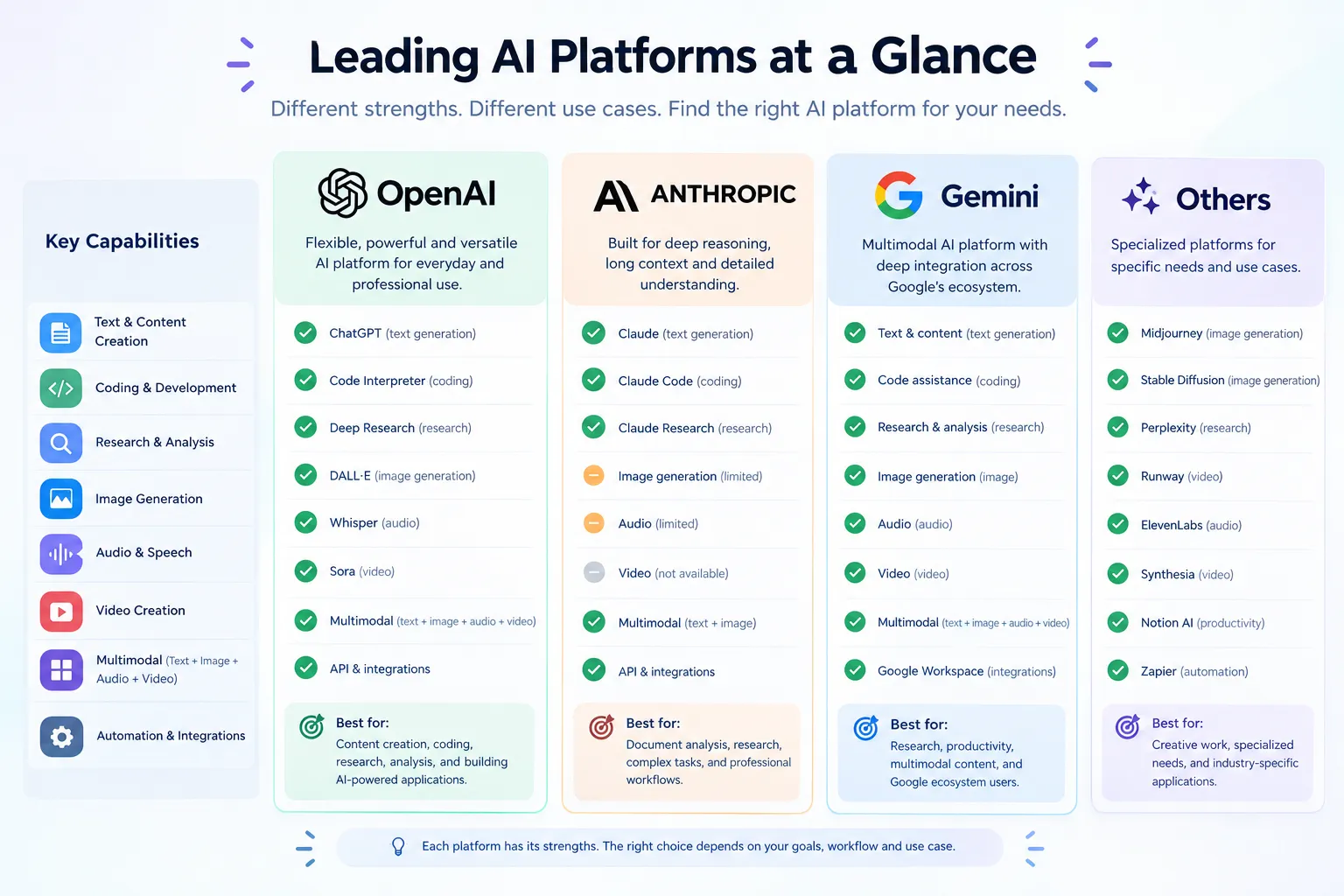
OpenAI, Anthropic, and Google receive significant attention, but they are not the entire AI ecosystem.
Many other companies and AI developers are creating platforms for specific needs. Some focus on coding, others on research, image generation, audio, video, marketing, productivity, automation, or specialized business applications.
This creates an interesting shift in how people use AI.
Instead of asking, “Which is the best AI platform?”, a more useful question is:
“Which AI platform is most suitable for this particular task?”
A developer may prioritize coding capabilities. A marketer may need content and research platforms. A designer may be more interested in image-generation platforms. A business owner may care most about automation and integrations.
The right choice can therefore change from one task to another.
What Should You Look for When Choosing an AI Platform?
Choosing an AI platform doesn’t have to be complicated. Start with your requirements and work backward.
1. Define the Task
Be specific about what you want AI to help you accomplish.
Do you need to write an article, summarize a report, analyze information, generate code, create visuals, or automate a workflow?
2. Consider the Type of Output
Different AI platforms are designed for different types of content and tasks. Decide whether you need text, code, images, audio, video, research, or a combination.
3. Think About Context
If you regularly work with long documents, detailed instructions, or large amounts of information, look for an AI platform that can handle your workflow effectively.
4. Check Integrations
For professional use, integrations can be just as important as the underlying technology. An AI platform that connects with the applications you already use can save significant time.
5. Compare Cost and Accessibility
Some AI platforms provide free access, while others use subscriptions, credits, or usage-based pricing. Compare the pricing with how frequently you expect to use the platform.
AI Platforms Are Only One Part of the Picture
It is easy to focus on the platform itself, but the applications and tools built around AI can make an equally important difference.
Two platforms may offer similar capabilities but provide completely different experiences because of their interface, integrations, workflow features, templates, automation options, or specialized functions.
This is why discovering the right AI platform or AI tool can sometimes be more useful than simply searching for the newest AI technology.
Discover More AI Platforms with PoweredByAI
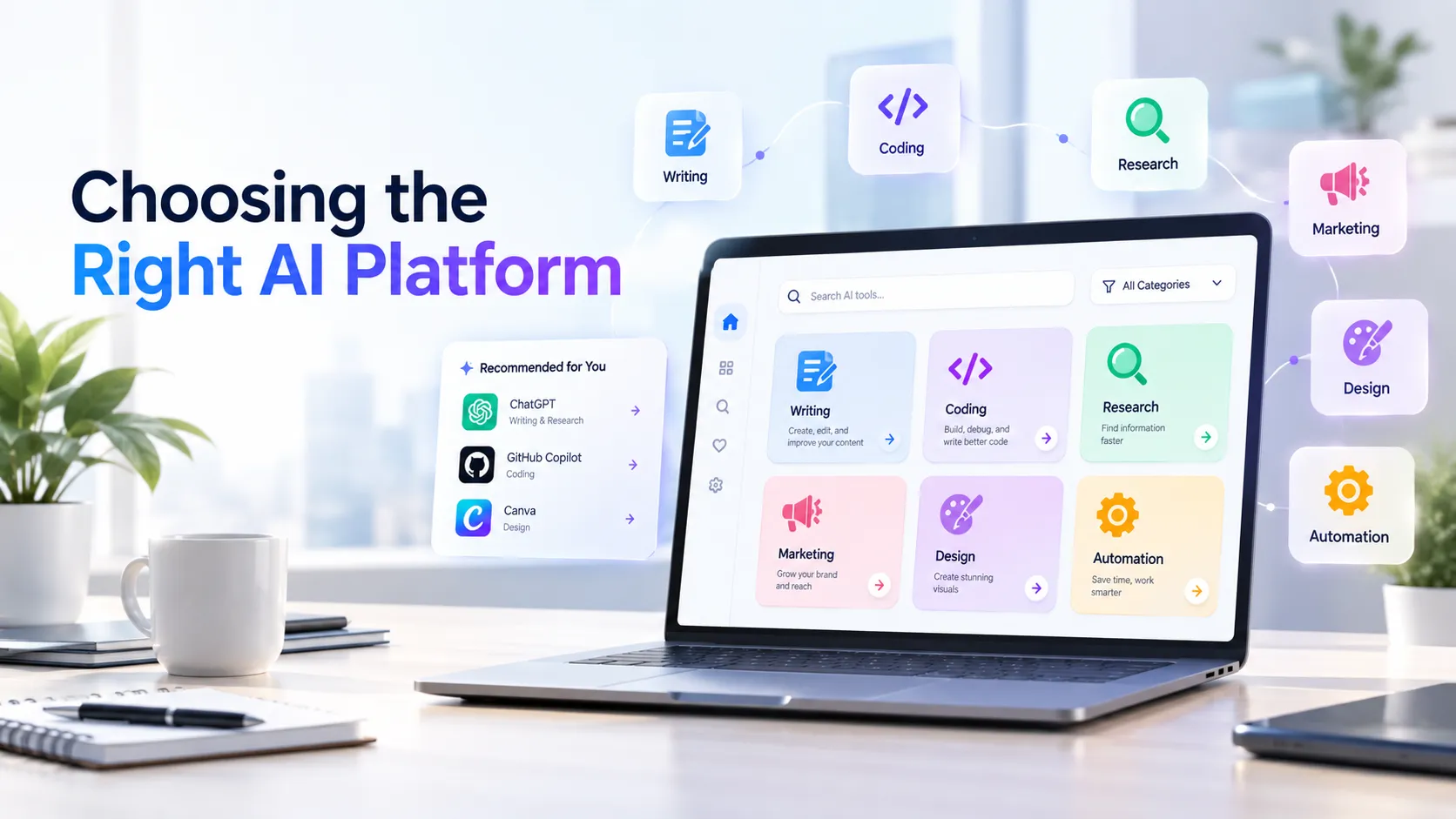
With thousands of AI platforms and tools available today, finding the right option for a specific task can take time.
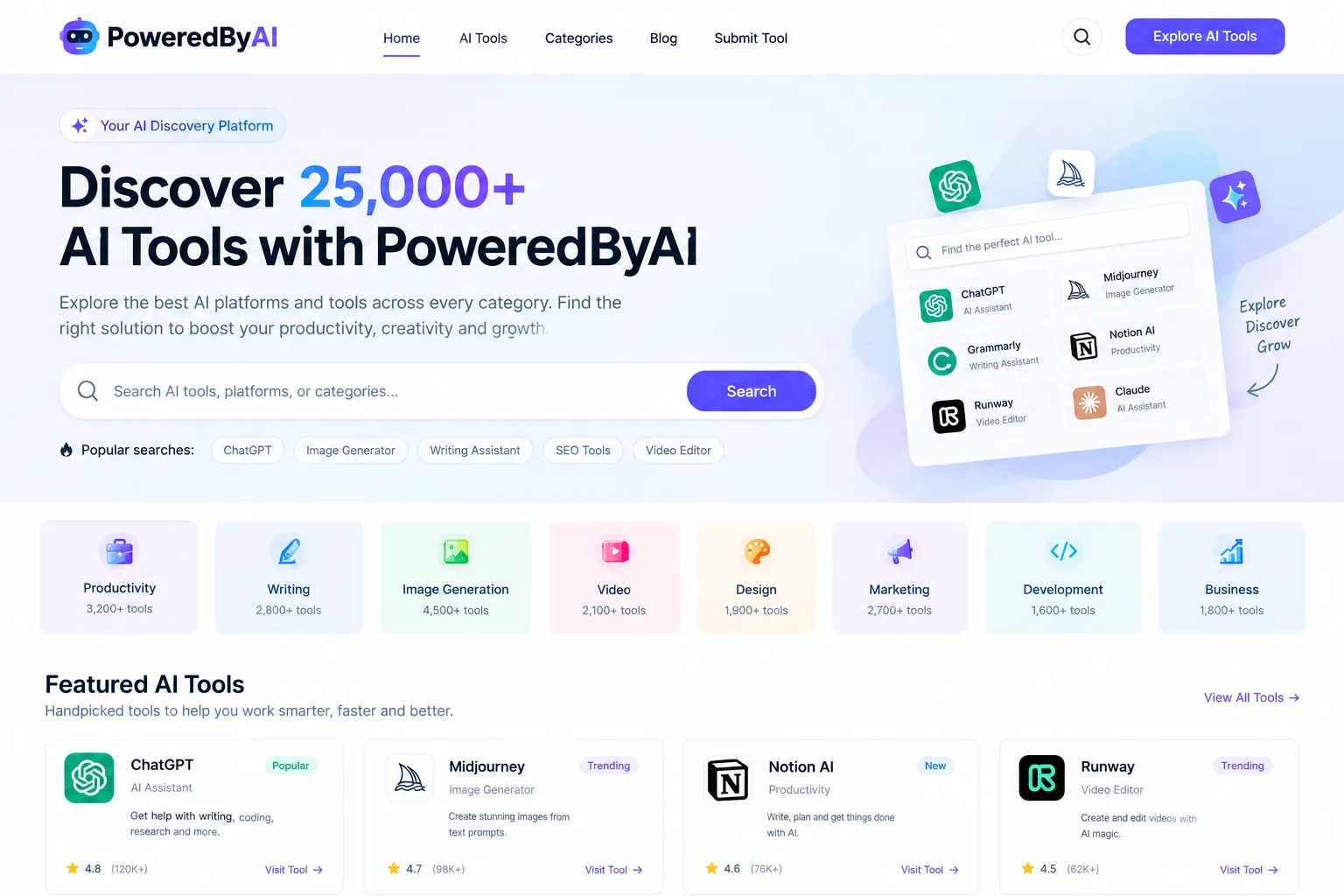
PoweredByAI makes AI discovery easier by bringing a wide range of AI tools and platforms together in one place. Users can explore 25,000+ AI tools across different categories and use cases.
Whether you are looking for platforms and tools for:
- Writing
- Coding
- Marketing
- Productivity
- Research
- Design
- Business
- Automation
you can explore different options based on your specific needs.
Instead of searching randomly for an AI product, you can start with the task you want to complete and discover AI platforms and tools designed around that use case.
What Does the Future of AI Platforms Look Like?
The AI landscape is moving quickly. AI technology is becoming more capable, while platforms are becoming more specialized.
We are also likely to see more workflows that combine multiple AI platforms and tools. A business might use one platform for writing, another for analysis, and a specialized platform for automation or creative work.
For users, this means having more choices—but also more responsibility to choose the right platform.
The goal isn’t to use the newest AI platform simply because it is new. The goal is to find technology that genuinely improves the way you work.
Final Thoughts
OpenAI, Anthropic, Google, and many other companies are contributing to an increasingly diverse ecosystem of AI platforms.
Each platform can have different capabilities and use cases, and the right choice depends on your specific requirements. Start with the task, consider the type of output you need, compare features and integrations, and then choose the platform that fits your workflow.
And if you want to explore beyond the major AI platforms, PoweredByAI offers access to 25,000+ AI tools, making it easier to discover tools and platforms for different professional and everyday needs.
The future of AI isn’t about relying on one platform for everything. It’s about knowing which AI platform to use for the job in front of you.