Hybrid Education Models: Combining Online and Offline Learning
Education systems around the world are evolving rapidly due to advancements in digital technology and changes in learning preferences. One of the most significant developments in modern education is the rise of hybrid learning models. Hybrid education combines traditional face-to-face classroom instruction with online learning methods, creating a flexible and dynamic approach to education.
This model gained global attention during the COVID-19 pandemic when institutions had to adopt online platforms to continue teaching. However, even after schools and universities reopened, educators recognized the long-term benefits of blending online and offline learning. Hybrid education allows institutions to maintain the structure of classroom teaching while also using digital tools to enhance learning experiences.
Today, hybrid education is being adopted by schools, colleges, universities, and corporate training programs because it offers flexibility, accessibility, and improved engagement. By combining the strengths of both traditional and digital learning environments, hybrid models are shaping the future of education.
Understanding the Concept of Hybrid Education
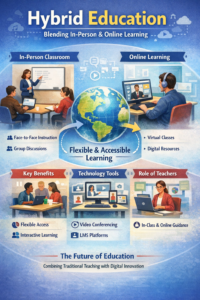
Hybrid education refers to a learning system that integrates both in-person classroom instruction and online learning activities. In this model, students participate in physical classes while also completing assignments, discussions, or lectures through digital platforms.
Unlike fully online education, hybrid learning maintains a strong classroom presence where teachers can interact directly with students. At the same time, online tools provide additional learning resources such as recorded lectures, digital assignments, and collaborative platforms.
This blended approach allows educators to design courses that balance traditional teaching methods with modern technology. As a result, students can experience structured classroom learning while also benefiting from flexible digital resources that support independent study.
Benefits of Combining Online and Offline Learning
One of the major advantages of hybrid education is flexibility. Students can access course materials online at any time, allowing them to learn at their own pace. Recorded lectures, digital notes, and online discussions enable learners to review topics whenever necessary.
Hybrid learning also improves accessibility. Students who may face geographical, physical, or scheduling limitations can participate in education more easily through online components.
Additionally, this model encourages active learning. In traditional classrooms, instructors can focus more on discussions, problem-solving activities, and collaborative projects while students study theoretical material online. This approach helps create a more engaging and interactive learning environment.
Technology Tools Supporting Hybrid Learning
Digital technology plays a crucial role in the success of hybrid education models. Learning management systems allow teachers to organize course materials, assignments, and assessments in one central platform. Students can access these resources anytime and track their academic progress.
Video conferencing tools also enable real-time interaction between students and instructors. These platforms allow educators to conduct live lectures, virtual discussions, and collaborative group activities even when participants are in different locations.
Other technologies such as digital whiteboards, cloud storage, and online collaboration tools help improve communication and knowledge sharing. These technologies ensure that both online and classroom components of hybrid education remain connected and effective.
Role of Teachers in Hybrid Education
Teachers play a critical role in designing and managing hybrid learning environments. Unlike traditional classrooms, hybrid education requires educators to plan lessons that work effectively in both online and in-person formats.
Instructors must create engaging digital content such as recorded lectures, presentations, and online quizzes while also leading interactive classroom discussions. This balanced approach helps students understand complex topics and apply their knowledge in practical situations.
Teachers also act as mentors who guide students through both digital and physical learning spaces. By providing feedback, encouraging participation, and monitoring progress, educators ensure that students remain motivated and engaged throughout the learning process.
Student Engagement and Learning Experience
Hybrid learning can significantly improve student engagement when implemented effectively. Online platforms allow students to participate in discussions, share ideas, and collaborate on projects beyond the physical classroom.
The ability to access digital resources also supports different learning styles. Some students prefer visual or interactive learning materials, while others benefit from reading or listening to recorded lectures. Hybrid education provides multiple ways for students to interact with information.
Additionally, combining online and offline learning encourages students to take greater responsibility for their education. Independent study through digital resources helps learners develop self-discipline, time management, and critical thinking skills.
Challenges of Hybrid Education Models
Despite its many benefits, hybrid education also presents certain challenges. One of the main concerns is the digital divide, where some students may not have reliable internet access or suitable devices for online learning.
Another challenge is maintaining consistent engagement in both online and classroom environments. Students may sometimes feel disconnected from instructors or peers if digital communication is not effectively managed.
Educators must also invest time in learning new technologies and adapting their teaching strategies. Institutions need to provide training and technical support to ensure teachers can effectively manage hybrid learning platforms.
The Future of Hybrid Learning in Education
Hybrid education is expected to play a significant role in the future of learning. As technology continues to evolve, educational institutions are developing new digital tools that enhance teaching and learning experiences.
Artificial intelligence, virtual classrooms, and interactive educational platforms are gradually becoming part of modern hybrid education systems. These technologies can provide personalized learning experiences, automated assessments, and real-time feedback for students.
Moreover, hybrid models allow institutions to expand educational opportunities beyond physical campuses. Universities and training organizations can reach global audiences while maintaining high-quality instruction through blended learning strategies.
Conclusion
Hybrid education models represent a major transformation in modern learning systems. By combining traditional classroom teaching with online learning tools, this approach creates a flexible and engaging educational environment.
Students benefit from greater access to resources, personalized learning opportunities, and improved collaboration. At the same time, educators can use digital technologies to enhance teaching methods and create interactive learning experiences.
Although challenges such as technological access and teacher training remain, the advantages of hybrid learning continue to drive its adoption worldwide. As educational institutions invest in digital infrastructure and innovative teaching strategies, hybrid education is likely to become a permanent and influential part of the global education system.
In the coming years, the integration of online and offline learning will continue to reshape how knowledge is delivered and how students prepare for future careers. Hybrid education models offer a balanced approach that combines the strengths of traditional instruction with the possibilities of digital technology.
Read more : webxcels.com