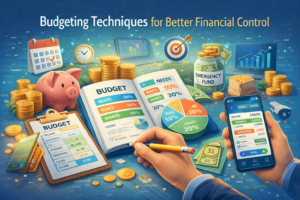
Budgeting Techniques for Better Financial Control
Managing personal finances effectively is an essential skill for achieving long-term financial stability and security. Budgeting is the process of planning how income will be spent and saved over a specific period of time. It helps individuals track their earnings, control expenses, and make informed financial decisions. Without a clear budget, it becomes difficult to understand where money is going, which can lead to unnecessary spending and financial stress.
In today’s fast-paced world, many people struggle with rising living costs, debt management, and saving for future goals. Budgeting techniques provide practical methods for organizing finances and maintaining better control over money. By adopting effective budgeting strategies, individuals can reduce financial pressure, build savings, and achieve both short-term and long-term financial goals.
Understanding the Importance of Budgeting
Budgeting plays a fundamental role in maintaining financial discipline and preventing overspending. It provides a clear picture of income sources and regular expenses, allowing individuals to allocate funds wisely. By tracking spending habits, people can identify unnecessary expenses and make adjustments to improve financial health.
A well-planned budget also helps in preparing for unexpected financial situations such as medical emergencies or sudden expenses. It ensures that essential needs such as housing, food, and utilities are prioritized while leaving room for savings and personal goals. When budgeting becomes a regular habit, it strengthens financial awareness and encourages responsible money management.
The 50/30/20 Budgeting Rule
One of the most widely used budgeting techniques is the 50/30/20 rule. This method divides income into three categories to simplify financial planning. According to this rule, 50 percent of income should be allocated to essential needs such as rent, groceries, utilities, and transportation.
Thirty percent of income is reserved for discretionary spending, which includes entertainment, dining out, hobbies, and lifestyle expenses. The remaining 20 percent is dedicated to savings and debt repayment. This approach provides a balanced framework for managing expenses while ensuring that savings remain a priority. Many financial experts recommend this method because of its simplicity and effectiveness.
Zero-Based Budgeting Approach
Zero-based budgeting is a technique where every unit of income is assigned a specific purpose. In this method, total income minus total expenses equals zero because every dollar is allocated to spending, saving, or investing. This approach requires individuals to plan each expense carefully before the month begins.
The main advantage of zero-based budgeting is that it increases awareness of financial decisions and eliminates unplanned spending. By assigning every dollar a role, individuals become more conscious about where their money goes. This method is particularly helpful for people who want to gain strict control over their finances and reduce wasteful expenses.
Tracking Expenses Regularly
Expense tracking is an essential component of effective budgeting. Many people underestimate how small daily purchases can accumulate over time and affect financial stability. Recording every expense helps individuals understand their spending patterns and identify areas where they can reduce costs.
Tracking can be done using financial apps, spreadsheets, or simple notebooks. The goal is to maintain consistency and review spending regularly. When individuals monitor their expenses closely, they become more mindful of their financial behavior and can make adjustments that support their long-term financial goals.
Setting Clear Financial Goals
Financial goals provide motivation and direction for budgeting efforts. These goals may include saving for a home, building an emergency fund, paying off debt, or planning for retirement. When people define specific financial objectives, budgeting becomes more purposeful and meaningful.
Clear goals also help prioritize spending decisions. For example, individuals may reduce unnecessary expenses in order to increase their savings for a major life milestone. Setting both short-term and long-term financial goals ensures that budgeting supports future financial security and personal aspirations.
Building an Emergency Fund
An emergency fund is a critical part of financial planning and budgeting. It provides a safety net for unexpected expenses such as medical bills, job loss, or urgent repairs. Without an emergency fund, individuals may rely on credit cards or loans, which can lead to financial difficulties.
Financial advisors often recommend saving enough to cover several months of essential living expenses. By gradually contributing to an emergency fund each month, individuals can build financial resilience. This preparation reduces stress during unexpected situations and helps maintain financial stability.
Managing Debt Effectively
Debt management is another important aspect of budgeting. High levels of debt can limit financial freedom and reduce the ability to save for future goals. Creating a budget allows individuals to allocate funds toward paying down debt systematically.
Common debt repayment strategies include focusing on high-interest debts first or paying off smaller balances to build momentum. Consistent payments and careful financial planning can gradually reduce debt over time. By incorporating debt repayment into a budget, individuals gain greater control over their financial obligations.
Using Technology for Budget Management
Digital tools have made budgeting easier and more accessible than ever before. Many financial applications and online platforms help users track spending, set savings goals, and analyze financial patterns. These tools automatically categorize expenses and provide visual reports that make financial management simpler.
Technology can also send reminders for bill payments and savings contributions. This reduces the risk of late fees and encourages consistent financial habits. By using digital budgeting tools, individuals can maintain better control over their finances and stay organized with minimal effort.
Adjusting the Budget Over Time
A budget should not remain static because financial situations and life circumstances change over time. Changes such as salary increases, new expenses, or shifting financial goals may require adjustments to the existing budget plan.
Regularly reviewing and updating the budget ensures that it continues to reflect current financial priorities. Flexibility allows individuals to adapt to changing conditions while maintaining overall financial discipline. A well-adjusted budget remains effective and sustainable in the long term.
Developing Consistent Financial Habits
Successful budgeting ultimately depends on consistent financial habits. Small actions such as reviewing expenses weekly, saving regularly, and avoiding impulsive purchases can significantly improve financial health. Discipline and patience are essential for maintaining a successful budgeting routine.
Over time, these habits create a strong foundation for financial stability and long-term wealth building. Individuals who consistently follow budgeting practices are better prepared to handle financial challenges and achieve their financial aspirations.
Conclusion
Budgeting techniques are powerful tools for achieving better financial control and long-term stability. Methods such as the 50/30/20 rule, zero-based budgeting, and regular expense tracking help individuals organize their finances and make smarter spending decisions. Setting financial goals, building emergency funds, and managing debt further strengthen financial security.
Incorporating these budgeting strategies into everyday life encourages responsible financial behavior and reduces financial stress. With careful planning, discipline, and the use of modern financial tools, individuals can develop a balanced approach to money management and create a secure financial future.
Read more : engahmedgamal.com