Education Trends in 2026 Transforming Modern Learning Methods
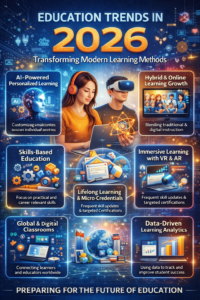
Education is undergoing a major transformation as technology, globalization, and changing workforce demands reshape the way people learn. In 2026, traditional classroom methods are evolving into more flexible, technology-driven learning environments that focus on skills, personalization, and lifelong learning. Educational institutions, teachers, and students are adapting to new digital tools and innovative teaching strategies that enhance engagement and improve learning outcomes.
Modern education is no longer limited to textbooks and physical classrooms. Online platforms, artificial intelligence, immersive technologies, and data-driven teaching methods are redefining how knowledge is delivered and accessed. These developments allow students to learn at their own pace, explore interactive content, and gain practical skills that are relevant in today’s rapidly changing job market.
Understanding the key education trends in 2026 helps educators, institutions, and learners prepare for the future of learning. The following trends highlight how modern education systems are evolving to meet the needs of a digital and knowledge-based society.
Table of Contents
TogglePersonalized Learning Through Artificial Intelligence
One of the most significant trends shaping modern education is the growing use of artificial intelligence to personalize learning experiences. AI-powered learning platforms analyze student performance, learning pace, and knowledge gaps to deliver customized educational content. Instead of a one-size-fits-all approach, students receive lessons and exercises tailored to their individual needs.
This technology allows teachers to better understand student progress and identify areas where additional support may be required. AI-driven systems can also recommend learning materials, quizzes, and activities that match each student’s skill level. As a result, students are able to learn more efficiently while maintaining higher levels of engagement and motivation.
Personalized learning supported by AI helps create a more inclusive education system where students with different abilities and learning styles can succeed. In 2026, AI tools are becoming an essential component of modern educational environments.
Growth of Hybrid and Online Learning Models
The expansion of hybrid and online learning continues to reshape educational institutions worldwide. Hybrid learning combines traditional classroom instruction with online digital platforms, allowing students to access educational materials both in person and remotely. This flexible approach offers greater convenience and accessibility for learners.
Online education platforms provide students with access to courses from universities, training centers, and independent educators around the world. These platforms often include recorded lectures, discussion forums, digital assignments, and interactive assessments. Students can learn at their own pace while still receiving guidance from instructors.
In 2026, many educational institutions are adopting hybrid learning models because they improve accessibility and accommodate diverse student needs. This blended approach allows schools and universities to deliver high-quality education while embracing the benefits of digital technology.
Immersive Learning with Virtual and Augmented Reality
Virtual reality (VR) and augmented reality (AR) technologies are creating immersive learning environments that make education more engaging and interactive. These technologies allow students to explore complex subjects through realistic simulations and visual experiences that would be difficult to replicate in traditional classrooms.
For example, VR can transport students to historical locations, scientific laboratories, or even outer space, providing deeper understanding through experiential learning. AR technology can overlay digital information onto physical environments, helping students visualize concepts such as anatomy, engineering structures, or scientific experiments.
Immersive technologies encourage active participation and improve knowledge retention by allowing students to experience learning rather than simply reading about it. As these technologies become more affordable and accessible, they are playing a larger role in transforming educational practices in 2026.
Focus on Skills-Based Education
Another major trend in modern education is the growing emphasis on skills-based learning. Employers increasingly value practical skills such as critical thinking, problem-solving, communication, and digital literacy. As a result, educational institutions are shifting their focus from purely theoretical knowledge to practical, career-relevant skills.
Skills-based education includes project-based learning, real-world problem solving, internships, and hands-on activities that allow students to apply their knowledge in meaningful ways. This approach prepares learners for the demands of modern workplaces and helps them develop adaptable skills that remain valuable in a rapidly changing economy.
In 2026, many universities and training programs are designing curricula that emphasize industry-relevant competencies. This shift ensures that students graduate with both academic knowledge and practical abilities needed for professional success.
Lifelong Learning and Micro-Credentials
The concept of lifelong learning is becoming increasingly important as industries evolve and new technologies emerge. In 2026, individuals are expected to continuously update their knowledge and skills throughout their careers. Education is no longer limited to a single degree but extends across an entire lifetime.
Micro-credentials, short-term certifications, and specialized training programs are becoming popular ways to gain targeted knowledge in specific fields. These programs are often flexible, affordable, and designed to address current industry demands. Learners can quickly acquire new skills without committing to long academic programs.
Lifelong learning empowers individuals to remain competitive in the workforce and adapt to technological changes. Educational institutions and online platforms are expanding their offerings to support continuous skill development and professional growth.
Data-Driven Education and Learning Analytics
Data analytics is playing an increasingly important role in improving educational outcomes. Learning management systems and digital platforms collect valuable data on student performance, engagement, and learning patterns. This information helps educators make informed decisions about teaching strategies and curriculum development.
Learning analytics allows teachers to identify struggling students early and provide targeted support before academic challenges become serious. It also helps institutions evaluate the effectiveness of courses and improve overall educational quality. By analyzing data, educators can refine teaching methods and create more effective learning experiences.
In 2026, data-driven education is helping institutions move toward more evidence-based teaching practices. This approach supports better academic performance while ensuring that educational resources are used efficiently.
Global Collaboration and Digital Classrooms
Technology is enabling students and educators from different parts of the world to collaborate in virtual learning environments. Digital classrooms allow learners to participate in international discussions, group projects, and cultural exchanges without leaving their homes. This global connectivity enriches the educational experience by exposing students to diverse perspectives and ideas.
Collaborative tools such as video conferencing, cloud-based document sharing, and virtual workspaces make it easier for students to work together on projects. These tools help develop teamwork, communication, and cross-cultural understanding—skills that are essential in a globalized world.
In 2026, global collaboration is becoming an integral part of modern education, preparing students to thrive in interconnected professional environments.
Conclusion
Education in 2026 is being transformed by technological innovation, evolving workforce demands, and the growing need for flexible learning opportunities. Trends such as artificial intelligence-powered personalization, hybrid learning models, immersive technologies, and skills-based education are reshaping how knowledge is delivered and experienced.
At the same time, lifelong learning and data-driven educational strategies are helping individuals and institutions adapt to rapid technological change. Modern learners have access to a wide range of digital tools and educational resources that support continuous skill development and global collaboration.
The future of education lies in creating dynamic learning environments that combine technology with effective teaching practices. By embracing these emerging trends, educational institutions can better prepare students for the challenges and opportunities of the modern world. As education continues to evolve, it will play an even more critical role in shaping innovation, economic growth, and social progress.
Read more : webxcels.com